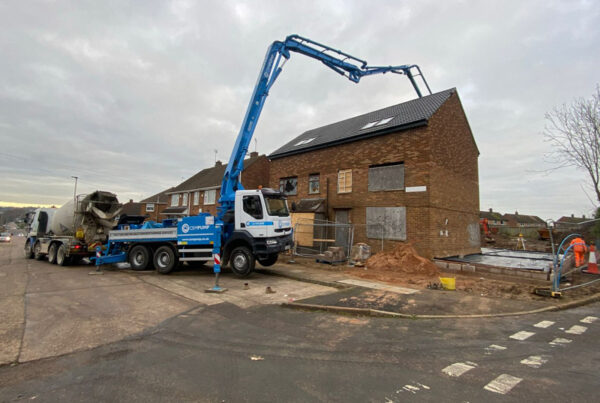
The sun is shining, and the temperature is rising in the UK. Many builders undergo health and safety training before handling concrete. Any cement contact can cause caustic damage and chemical burns, so you must cover up, wear gloves and protective garments, and apply sunscreen. Read on for a nifty guide to working with concrete in hot weather.
Organising
Builders usually want trenches or slabs concreted as soon as they are completed, approved by building control or both to limit the risk of weather damage. A slight mist of cool water over the construction area, trench side, shuttering, and reinforcement can decrease rapid evaporation in hot, dry weather, so builders must remove water from trenches and other regions. Preparing the night before the work is the best idea.
Keep the sun from drying out concrete for smaller jobs. Slabs should be laid after building the walls and roof, and temporary windbreaks or sun screens should be installed to prevent concrete crusting or stiffening. This slows water evaporation from concrete, preventing cracking or crazing. Hot weather warrants more control expansion joints. Consult a structural engineer or designer to appropriately plan and control the space expansion joints.
Managing Evaporation
The concrete surface may suffer if water evaporates too quickly. Water shortages may weaken concrete, especially near the slab or foundation. This increases the risk of concrete cracking or failure. If evaporation is fast, hardened concrete will be sand-like and powdery.
When the water sheen disappears, or the concrete can take a finishing tool, hand float it. Consider sealing the concrete with an Evaporation Retarder. Cover the entire surface with heat-reflective polythene sheeting, damped-down sacking, hessian, or waterproof paper and remove it the day after setting.
Curing Concrete
Moist water curing is needed for several hours after concrete placement and completion. Continuous moist curing during hot weather is advised. Formwork should be removed immediately to protect the concrete. After that, lightly spray the exposed surfaces with water and let it drip into the shuttering. As above, cover the surface with curing paper, heat-reflective plastic sheets, or membrane-forming curing materials if moist curing cannot be completed for more than 24 hours.
In Conclusion
UK contractors are unlikely to face the extreme temperatures needed for high-quality concrete that other countries face. Although rare, it is still advisable for builders and DIYers to be aware of such weather conditions. After all, fixing concrete or screed failure can be expensive; therefore, it’s better to be safe than sorry!
Cempump offers swift and professional concrete services. Contact our team to discuss your requirements on 01332 410021.