If you’re planning a new floor, one of the first decisions you’ll need to make is which type of screed to use. Screed is the layer that sits on top of your subfloor and creates a smooth, level surface for your final flooring, whether that’s tiles, carpet or wood. There are two main options: a traditional sand and cement screed, or a modern thin (liquid) screed. Here’s how they compare, in plain English.
What is the difference between thin screed and traditional screed?
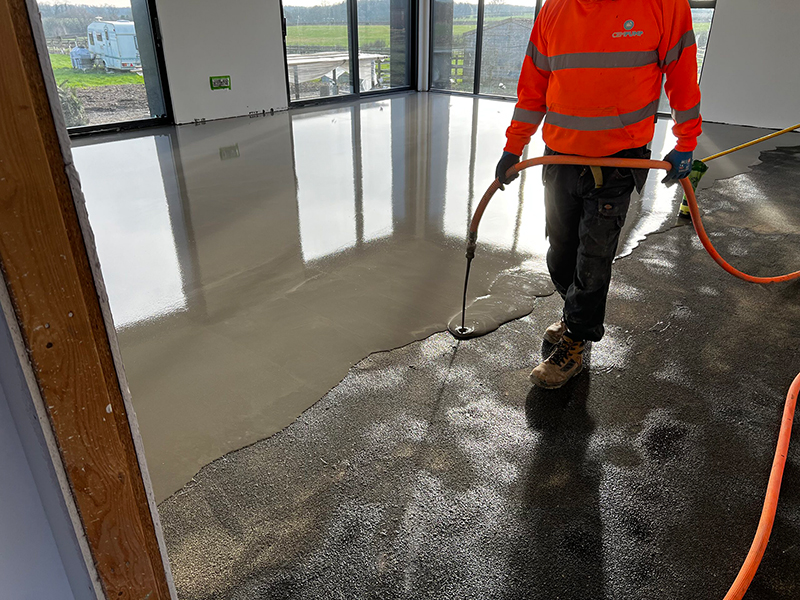
Traditional screed is a firm mix of sand and cement that’s mixed on site and spread out by hand using trowels. It’s the method that’s been used for decades. Thin screed, also known as liquid or flow screed, is much runnier. It’s pumped straight from the wagon into your floor and spreads itself out evenly as it’s poured, so there’s very little manual work involved.
How thick does the screed need to be?
This is one of the biggest differences between the two. Traditional screed usually needs to be laid quite thick, around 65-75mm, especially if it’s going over underfloor heating pipes. A floor screed made from liquid screed can be laid much thinner: as little as 12mm in some cases, and typically 35-50mm over underfloor heating. That difference really adds up if you’re working on a renovation or an upstairs room where every millimetre of height matters.
How long does screed take to dry?
Traditional screed takes time to dry, roughly 1mm a day for the first 40mm, then even slower after that. On a thick floor, that can mean weeks of waiting before you can lay your final flooring. Because liquid screed is laid so much thinner, it dries much faster in practice. You can usually walk on it within a day or two, and depending on the product used, floor coverings can go down in as little as two to three weeks.
Which is better for underfloor heating?
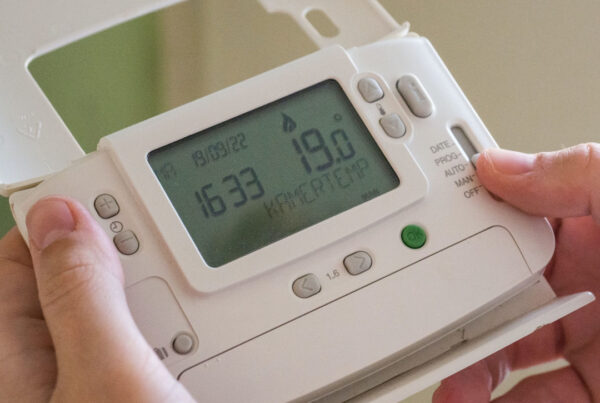
Liquid screed flows completely around the heating pipes, leaving no gaps, which means heat travels through the floor more efficiently and the room warms up faster. Traditional screed is thicker, so it takes longer to heat up and longer to cool down again once the heating switches off. With thin screed, you can usually turn your underfloor heating on after about a week, following the right warm-up process.
Which is quicker to install?
Because it’s pumped rather than hand-laid, thin screed can cover a large floor area in a single day. We regularly complete an average-sized home in one visit, and can pump screed a long way from the wagon, even up staircases or through tight spaces, without any fuss. Traditional screed takes longer, since it relies on a team mixing, carrying and levelling the material by hand, which naturally slows things down on bigger jobs.
Which gives a better finish?
Liquid screed naturally settles into a flat, even surface, so there’s less chance of bumps, dips or weak spots. With traditional screed, the finish depends a lot on the skill and consistency of whoever is laying it, which can vary across a bigger floor.
Which is cheaper?
For a small area, traditional screed can sometimes work out slightly cheaper on materials alone. But once you factor in labour, drying time, and the quality of the finish, liquid screed often ends up being the better value option, especially on larger floors where speed makes a real difference. Our guide on what affects the cost of concrete pump hire explains more about how these savings add up.
So, which screed should you choose?
It really depends on your project. If you have a large area, a tight deadline, or you’re installing underfloor heating, liquid screed is usually the better fit. For smaller, simpler jobs without those pressures, traditional screed can still do the job well. Our post on when flow screeding or floor screeding is required covers this in more detail, and our FAQ page answers common questions about drying times, depths and screed types.
A reliable partner for your screeding project
At Cempump, we install both liquid and traditional screeds across projects of all sizes, from small domestic rooms to large commercial floors. Our flow screeding Derby team, along with our wider coverage across the Midlands, is on hand to help you choose the right screed for your build and get it installed properly the first time.
If you’re planning a project and want honest advice on the best screed for your needs, contact our team today to discuss your requirements and request a quote.
Call: 01332 410 021
Email: info@cempump.co.uk
Cempump – taking the hard work out of concreting.