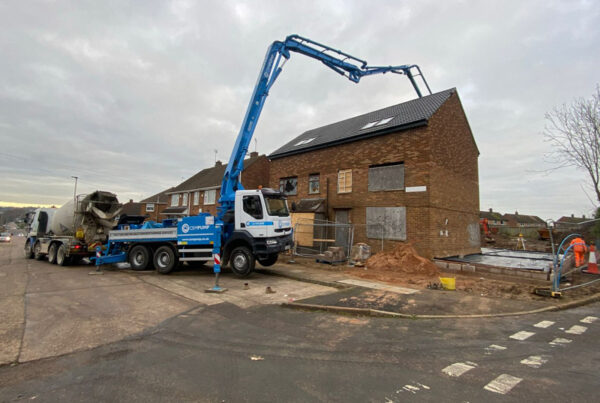
If you’re working under pressure or on a big job, a concrete pump is needed. Pumps can move enormous amounts of concrete far more quickly than a person with a wheelbarrow, but choosing the proper type of pump isn’t always that simple. Here, we compare the two types of concrete pumps.
Types of Pump
Boom and line pumps are the two primary types of concrete pumps. A line pump transports concrete from a mixer truck to the delivery location using a system of pipes and hoses, whereas a boom pump has a long, extended arm (referred to as a boom) fixed to a vehicle chassis.
In some circumstances, one type is more suited than the other, even if both are more effective than pouring by hand. The secret to a successful project is making the appropriate choice when choosing which to use.
When Is a Boom Concrete Pump Needed?
Boom pumps comprise a big pump unit affixed to a long, extensible arm installed on a truck or trailer. The boom can be positioned and manoeuvred to reach places that conventional concrete pouring techniques might find challenging.
A boom pump should be used if:
- You are engaged in long-distance labour. Depending on the model, the boom can sometimes extend significantly—up to dozens of meters. For instance, the range of our own boom pumps is 16 to 32 meters. Because of their lengthy arms, boom pumps can reach places that line pumps might not be able to.
- Pumping to a high altitude is necessary. Unlike line pipes, boom pumps may reach high and are usually strung over the ground. This is required, for example, when pumping concrete over a fence or into the second story of a structure.
- Concrete must be pumped immediately. Boom pumps can pump massive amounts of concrete considerably more quickly than line pumps since they are often much larger.
The following are some building projects that would benefit significantly from the usage of a boom pump:
- Skyscraper structures
- Dams and Bridges
- Elevated highway tunnels
When Is a Line Concrete Pump Appropriate to Hire?
A line pump’s components include a concrete hopper, a pumping mechanism that transfers the concrete via pipes or hoses, and a hose that directs the concrete to the intended spot. Numerous power sources, such as electric motors, diesel engines, or hydraulic systems, can power the pumping mechanism.
A line pump should be hired if:
- Concrete must be pumped through a structure. Line pumps use flexible hoses to get past obstructions and into places, boom pumps cannot reach. They are, therefore, more appropriate for interior settings.
- There’s not much room for you on-site. Line pumps are more compact than boom pumps, which need much room to set up and manoeuvre. Because of this, line pumps are more appropriate for pouring concrete in confined spaces or places with restricted access.
- You have a budget. Line pumps are typically less expensive to rent and run than boom pumps because they are smaller and have simpler technology.
Examples of construction projects where a line pump would be most helpful are as follows:
- Homes and residential structures
- Floors
- Driveways and Patios
- Pools and their decks
Cempump offers swift and professional concrete services. Contact our team to discuss your requirements on 01332 410021.