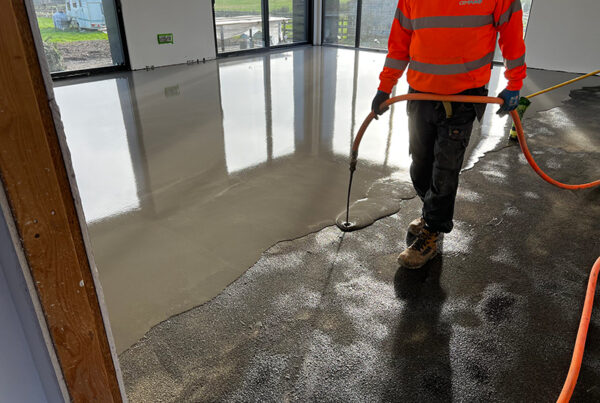
Cempump is excited to share the news of our recent partnership with Joe Booth Transport, to acquire their 36-meter boom pump and subsequent projects. We now offer Joe Booth customers various services besides our core offerings. These services include floor preparation, liquid screeds, and an extended fleet of concrete pumps, including our 20-, 35- and other line and screed pump options. So, what do floor preparation and liquid screeding entail?
Floor Preparation
The first step before installing new flooring material is to prepare the floor. This means ensuring the subfloor—the layer underneath the final floor covering—is in the greatest possible condition.
Inspection – The subfloor must be carefully inspected to find any issues that might impact the installation.
Levelling – Try to keep the subfloor as level as possible. Fill in or sand down any dips or lumps.
Cracks – The new flooring may begin to crack due to subfloor cracks. Cracks should be fixed using an appropriate patching substance.
Moisture – Too much moisture in the subfloor can cause mould to grow and distort new flooring. Using a moisture meter, determine the subfloor’s moisture content and take appropriate action.
Debris – Before installation, any dirt, dust, oil, or other debris on the subfloor needs to be removed.
Cleaning – The subfloor must be meticulously cleaned following its inspection. This could entail mopping, vacuuming, and sweeping.
Priming – To improve the adhesion of the new flooring, the subfloor may occasionally be primed. This is usually required for subfloors that are porous, like concrete.
Liquid Screeds
Liquid screeds are self-levelling floor preparation materials that create a smooth, even base for final floor coverings like tiles, wood, carpets, or vinyl. They have various benefits over conventional sand and cement screeds, which make them a preferred substitute:
Flowing consistency – Unlike traditional screed, which is stiffer and requires compaction, liquid screed has a thin, self-levelling consistency similar to a thick batter. This shortens installation time and labour, making pouring and pumping directly onto the subfloor easier.
Faster drying – Compared to several days for standard screed, the area will be dry and suitable for foot activity in 24-48 hours.
Smoother finish– Before adding final flooring, self-leveling qualities produce a level surface with few dips or bumps, requiring less sanding or grinding.
Reduced weight – Lighter than traditional screed, reducing the load on the structure and potentially allowing for thicker screed layers where needed.
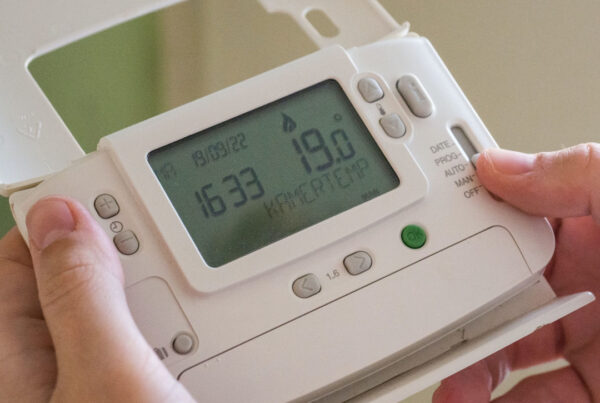
Enhanced thermal conductivity – Anhydrite screeds are superior heat conductors, which means underfloor heating systems work well with them.
Durability – Compared to conventional screed, this type of screed is less likely to break and distort.
Eco-friendly – Some anhydrite screeds contain recycled materials and have lower CO2 emissions than cement-based options.
Cempump offers a swift and professional floor screeding service. Contact our team to discuss your requirements.